Saturday, April 30, 2011

I recently read an article in the New York Times Book Review that concluded as follows:

“Since we are all mortal, none of us will experience love without also experiencing loss. This book has done what no other has for me in recent years: it has renewed my faith in the redemptive power of love, the need to give and get it unstintingly, to hold nothing back, settle for nothing less, because when flesh and being and even life fall away, love endures. This book is proof.”


The book being reviewed was Diane Ackerman’s One Hundred Names for Love. The reviewer: Abraham Verghese. Verghese’s novel Cutting for Stone has been on the print paperback bestseller list for 64 weeks and the e-bestseller list for 12. The latter number probably corresponds to the number of weeks the Times has had an e-bestseller list. At least one person kept urging me to read Cutting for Stone. I had enjoyed his nonfiction pieces in the New Yorker some time back, so I had no particular resistance to the idea of reading his novel, but every time I read the little squib about it—“Twin brothers, conjoined at birth and then separated, grow up amid the political turmoil of Ethiopia”—I just wasn’t moved to seek out a copy. Its bestsellerhood gave me a bit of pause as well. Not infrequently is there a book that the rest of civilization appears to have bought and loved that I and a few friends are simply unable to appreciate (Reading Lolita in Tehran comes to mind). Thankfully, my resistance eventually melted away, and I am here to say that Cutting for Stone is one of the best books I have read in quite a while. Saying it is about “two brothers…” is, as the cliché goes, like saying Moby Dick is about a whale. The quote I began with gives you an idea of the depth of feeling Verghese is capable of. Yes, the book is about two brothers, but actually quite a bit of the action takes place before they are born. The story takes in the entire community of people who work at a charity hospital in Ethiopia. The vividly drawn characters are of different nationalities and temperaments. Their common goal is to give medical help to the poor, but the intensity of their setting leads, inevitably, to intense emotions and relationships. Which have consequences, like the aforementioned twin boys. Enough said without spoilers. Just read it. This is one of those times that the masses are right in terms of the book they have bought and keep buying.

I’ve got hold of Verghese’s two memoirs and am savoring the thought of curling up with them. A friend says that they give insight into some of the background for the novel.

Sunday, February 06, 2011

Snow Angels, by Stewart O’Nan

Snow Angels by Stewart O'Nan: Book CoverPity the dear friend of mine who recommended this title to our book club. It was roundly criticized as so unremittingly bleak that there is not a lot to say about it except that O’Nan is a masterful portrayer of the lives of sad, dysfunctional people with no hope of recovery or redemption. Perhaps if we had read this in the midst of a beautiful summer we would have found something positive in it, but given that we are experiencing what has been called Snowmageddon, it didn’t have a chance. Still and all, this is an extremely well-written book by a very talented author, other works by whom I’ve enjoyed and even  recommend. 
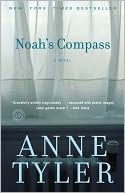
Noah's Compass, by Anne Tyler

Noah's Compass by Anne Tyler: Book Cover
Published in 2010, this is Anne Tyler's 17th novel, and I enjoyed it every bit as much as her most highly acclaimed works, Breathing Lessons and The Accidental Tourist. Tyler is a kind of  alchemist, whose compassionate vision allows her to take the saddest, most poignant aspects of life and magically convert them into humor. Liam Pennywell, the protagonist of Noah's Compass, is a typical Tyler misfit. He's 60 years old and doesn't have a success to his name, professionally or personally. He is knocked unconscious on the very first night he spends in the shabby Baltimore apartment into which he's been forced to downsize and wakes up in a hospital with no memory of the blow. Liam's family and few friends, who find him a puzzling curiosity (or worse) in the best of times, do not understand why the fact that he cannot remember the incident troubles him so desperately. To say much more would be to give away the delightful twists and turns of quirky Tylerian fate to which this leads. Suffice to say that Liam stumbles upon a woman who is every bit as much of a misfit as he is; however, thanks to Tyler's fidelity to life's messiness, that does not mean we get an ending that is neatly tied up with a bow.    

Tuesday, January 25, 2011

The Cookbook Collector, by Allegra Goodman

The Cookbook Collector by Allegra Goodman: Book CoverI know that I read and liked at least two of Allegra Goodman's previous novels, Intuition and Paradise Park. If I haven't read her first novel, Kaaterskill Falls, the reason is, inevitably, that I own it. With print books--not so with e-books so much, so far--I have the tendency to relax once I have bought them and not actually read them--whereas when I borrow books from the public library I tend to actually read them. I guess that's because the due date becomes a kind of deadline. But I digress from my point, which is that, as much as I may have liked her previous works, they did not prepare me for how much I would love love love her latest novel, The Cookbook Collector. Since I read it, I learned from a friend that it is on the list of independent booksellers' top 10 of 2010. I'd better check out the rest of that list.


It's true that the book's two subplots center on things of such interest to me and like-minded folk (who in this context I would characterize as fiction-, computer-, and food-loving librarians, I guess), that it had a very strong chance of winning me over even before I had read beyond the flap. But it's nearly 400 pages long, and after I got into it I could hardly put it down, Goldman accomplished much more than merely assembling components that would draw in a certain reader demographic. 

The story, which centers on two sisters, is infused with a special poignancy because of the skillful way Goodman conveys the way the childhood loss of their mother affected them, both as individual personalities and the way they relate to one another. The elder one, Emily, is the CEO of an Internet startup goes public during the course of the novel, promising truly inconceivable wealth for her and her colleagues, even while causing discomfort in her romantic life because her fiance's similar company lags behind hers in the timing of its IPO and its wealth. Where Emily is practical, her younger sister Jess has her head in the clouds, both literally as a vegan member of a Save the Trees coop, and figuratively, as a graduate student of philosophy. Jess's life is changed by her part-time job in a used bookstore, which is where the cookbook collection comes in. Enough said.

Warning: the number of characters in this book, each of whom Goodman provides with a vivid physical and psychological characterization, is positively Dickensian, and at first it can be a little overwhelming as she switches between plots and people. But once the plot and the principal characters take hold of you, the book is hard to put down and, when you are finished, forget. She also grounds her story very solidly and satisfactorily into its places--Berkeley and Cambridge, Mass.--and its time, 1999-2002, and the cookbook collection itself is thoroughly and delightfully portrayed. I'll have to find my copy of Kaaterskill Falls and dig into it, finally.

Saturday, November 06, 2010

I have occasionally fantasized about what my dog might say if she suddenly became able to talk. I imagine that she would reveal that she has a deeper understanding than we humans do of everything she has observed during her lifetime.

A variation on this scenario, involving a feline, was executed marvelously by the Japanese novelist Natsume Sōseki  in I Am a Cat (Wagahai wa neko de aru), and David Wroblewski’s The Story of Edgar Sawtelle does an outstanding job with the canine point of view.  In the latter vein, there is also The Art of Racing in the Rain, by Garth Stein, which is narrated by a very perceptive dog named Enzo. If you love dogs or car racing or both and need a brief, light entertainment, read this book.

Stein skillfully ties Enzo’s astute observations to a compelling plot. However, his attempt to extract a Buddhist-like philosophy from the human protagonist’s extraordinary ability to race cars, especially in the rain, becomes a bit heavy-handed at times-- or perhaps it just feels as if it was contrived with too close attention to what might appeal to the most book buyers and sellers. Nevertheless, the story’s heart is in the right place, and if you are in bed with a cold or your spirits are a low, this is just what you need to get through. 
Julia Glass is amazing! Since the publication of the National Book Award-winning Three Junes in 2002, she has cranked out three more novels, most recently The Widower’s Tale. Although I was not as impressed as many were with Three Junes, its 2006 sequel, The Whole World Over, enchanted me with its descriptions of a character running a bakery and the achingly poignant sections written from the point of view of a woman who has suffered slight brain damage. Then in 2008 came the very impressive and quietly affecting I See You Everywhere, which explored the lives of those left behind by a suicide.

Now we have The Widower’s Tale.  As in her other books, Glass tells this story in chapters that alternate the point of view among several characters, but what is astonishing here is how convincingly true each voice rings despite the huge range among them in terms of age, class, and other key characteristics. At moments the pomposity of the voice of the eponymous widower almost verges on caricature—would anyone alive today, even a retired Harvard University librarian, begin sentences addressed to his female offspring with “Daughter”?—but we soon understand that this affectation is a necessary part of the armor that he has donned to cope with the hand he has been dealt by life.

But what makes Glass a master of her craft is her ability to make the possessors of these unique voices come together as actors in a plot that makes you rush to turn to every next page as soon as possible, while at the same time feeling regret in advance as the dwindling number of dots at the bottom of the e-book reader screen indicate that the story will be ending too soon. The hints about how the destinies of characters will collide are such that there is a moment when the reader might think, scornfully, that the plot twists are too obvious, but just as in “real” life, there are plenty of surprises in the details.  

Saturday, October 09, 2010

I read two really great books this past week. What they had in common was beautiful writing that conveyed a deep understanding of and compassion for this dilemma called life, as well as the kind of page-turning suspense you'd expect from the best mystery. But in every other way--setting, characters, style--they were as different as could be. William Trevor's Love and Summer, which takes place in the Irish countryside, centers on the life of a young woman who, after her upbringing in a Catholic orphanage, is sent to be the maid to a widowed farmer. I surveyed reviews of it after reading, to see if it was as appreciated as it deserved to be, and was relieved to discover that there was considerable angst when it was long- rather than short-listed for the Man Booker Prize.

It's hard to write about Scott Spencer's Man in the Woods without giving part of the plot away, so suffice to say that it is set in the northeast United States in our time (around the year 2000) and delves deeply into the question of how and why we live. But far from being heavy-handedly philosophical, Spencer keeps you guessing, until the very last page, how these questions will be resolved for one man and his makeshift family--himself, a woman, child, and dog.

"Found in Translation," Michael Cunningham's New York Times op-ed piece of Sunday, October 2, begins with insightful musings on the translation process but quickly plunges into the heart of the matter to discuss writers, readers, and creativity. You must read it all, but here's a sample sentence: "We, as a species, are always looking for cathedrals made of fire, and part of the thrill of reading a great book is the promise of another yet to come, a book that may move us even more deeply, raise us even higher. . ."

Monday, September 06, 2010

Here I go again, making my first entry in close to a year! I’m sure I won’t be able to remember even books that, when I read them, I thought were among the best I’ve ever read (I admit that I award a lot of books that distinction, but it’s how I feel at the time!), but I will do my best. Instead of struggling to find an interesting enough variety of superlatives to distribute among the many candidates, I’ll simply list some of the best.

Dan Chaon, Await Your Reply (you need to read this twice or more to get everything, but it is so worth it!)

David Wroblewski, The Story of Edgar Sawtelle

Anna Quindlen, Every Last One

Anthony Trollope, He Knew He Was Right (I finally read it, after intending to for so long! A friend tells me that the six-part BBC dramatization is also wonderful. I enjoyed renewing my acquaintance with Trollope so much that I started another one I’ve never read before, Can You Forgive Her?)

Margot Livesey, The House on Fortune Street. I happened upon this after attending a wonderful event at Symphony Space. Margot Livesey, Jennifer Egan, and Siri Hustvedt had a public discussion entitled rereading Middlemarch. (Which I did, and of course loved all over again.) Apparently these three novelists had done a similar event previously to great acclaim. I had read nothing by any of them beforehand, and Livesey’s is the only one I have read since, although I have since picked up used copies of Egan’s Look at Me and Hustvedt’s The Sorrows of an American at one of the best local events we have in our vicinity, the Desmond Fish Library book sale in Garrison, New York. (We increased our book collection by twenty-odd volumes for twenty dollars and change once again.) Anyway, the three women are each different in the way they think about literature and express those thoughts, but with very light touch moderating by Egan the discussion proceeds smoothly and stimulatingly. The audience comments and questions are interesting as well—you feel as if you are at the meeting of a very large book club on the Upper West Side. Next spring they are doing Anna Karenina!

(I have since read the Jennifer Egan book Look at Me, and I’m not sure I can recommend it. That is, I do recommend it for its literary style and storycraft. Very highly, in fact. But the story is extremely disturbing and bleak.)

A friend introduced me to a great new mystery writer this year, and I’ve already read all six entries in Susan Hill’s Simon Serrailler series, which is all there are until the new once is released this month. Yes, they’re that good. As is always the case with really good mysteries, it’s not the crime detection that makes the books. In Hill’s case, it’s the characters and the setting. The stories take place in a small English town, where Simon Serrailler not only investigates difficult murder cases, he also maintains a relationship with his sister (they are two of triplets), who is a general practitioner in the town. Simon has disappointed their doctor father by being the only child who did not go into medicine, and tensions between parent and child continue. Hill’s books are populated with an amazing array of people in addition to the fascinating regulars, however, so that even as you are dying to know what is going to happen, say, with yet another woman who Simon is about to disappoint with his inability to sustain an intimate relationship, you soon become distracted by some other situation that captivates you just as much. And it turns out that before writing these mysteries, Susan Hill was highly respected for her literary fiction in England. Frustratingly, her many “straight” novels are not easy to find here at all. My own Bobst Library at NYU doesn’t even have many of them, despite having a couple of books of criticism about them. (I’m going to talk to our English literature selector about rectifying this!) The Westchester public library system has precious few as well. I just finished one that was available, called The Bird of Night. It is amazing and intense. Just after World War I, a scholar meets a famous poet who suffers terribly from manic depression. The former puts his own career and life on hold to take care of his mentally ill friend, who refuses medical help of any kind. Hill’s depictions of the poet’s psychological vicissitudes are devastating, and of course having read the mysteries it is interesting to relate his character to some of her very disturbed murderers. Strange Meeting, the other Hill title that I was able to find, is the best war novel I have ever read, because the war is not what it’s about. It is simply one of many backgrounds against which the realities of our emotional lives can be rendered as literature, waking us up to things that we are unable to see when we are in the midst of them. The plot is deceptively simple—two men meet as soldiers during combat. It’s a pity that these books are practically unknown and unobtainable. Someone needs to write one of those New York Times Book Review pieces urging the rediscovery of Hill’s nonmystery work.

A British author who the Times doesn’t neglect as badly is Jane Gardam, thankfully. Her Old Filth is everything this back-cover blurb says: “Excellent and compulsively readable. . . .Gardam’s novel is an anthology of bittersweet scenes, rendered by a novelist at the top of her form.”

Last month I participated in a weekend writing class at Omega led by Marge Piercy and Ira Wood (her husband of three decades). Wow! I was able to tell Marge that I had reviewed her amazing novel Gone to Soldiers in the late 1980s for the now-sadly-defunct women’s newspaper Sojourner. She knew the paper, though not my review, I imagine. Anyway, it was a terrific class that attracted some very talented people. The couple teaches the class every year at Omega and some other places, too, and it shows in the smooth way they run it, making every minute of the weekend count for the participants. They even set up a private wiki afterward so that we could continue sharing our work, but unfortunately people don’t seem to be doing it, as so often happens. It seems that no matter how good a writing retreat is and how enthusiastic the people are at the end of it, when they get back to their real lives, it is too hard to fit it in. Also, I think that sharing things in print is more intimidating for most of us than doing so aloud. If you’re interested in writing, Piercy and Wood have published the course in book form as So You Want to Write, and it’s excellent. The appendix has an excerpt from Wood’s novel Kitchen Man, which is absolutely uproarious--and poignant at the same time. Obtainable, but you won’t find it in your local bookstore or even many libraries, nor in e-form, although I did ask them both their feelings about e-books, and they said that in principle they are happy to make their stuff available in any possible form.

Marge’s memoir Sleeping with Cats is available as an e-book. I loved it and think that other women, particularly, who lived through the sixties and seventies would find it as interesting as I did. I also read the thriller that they wrote together, Storm Tide, and I’m sorry to say that it just doesn’t work. It’s puzzling, because the writing is really good, and it seems like the plot has potential, too, but something is wrong with it that I can’t articulate. I’ve been meaning to look at reviews to see if someone else has.

As I continue to try to practice fiction writing and look ahead to writing my PhD dissertation, I’ve been looking at some books about the psychology needed to both get one started writing on a given day and keep coming back to the project with as little angst as possible. I found David Boice’s How Writers Journey to Comfort and Fluency: A Psychological Adventure a valuable book of this genre and a lot of fun to read. He leads successful workshops designed to instill the writing habit, and the book is an attempt to let people get the experience in print. It has many, many quotations from participants in his classes, perhaps a few too many, but reading them made me feel less isolated in my struggles. I’ve just begun another book that approaches the topic from a different angle and is very promising so far: Ellen Langer’s On Becoming An Artist: Reinventing Yourself Through Mindful Creativity. In contrast to much of the reading I do about Buddhism, Langer believes that you can cultivate mindfulness without a dedicated meditation practice. She is an experimental psychologist and backs up her claims with evidence from the lab. Her writing is clear and to the point, as in, “We seek perfection and get frozen by the thought of our imperfection. This is ironic in that the outcomes we seek are more likely to come to our imperfect selves.”

Monday, November 09, 2009

Olive Kittredge by Elizabeth Strout and The Story of Edgar Sawtelle (David Wroblewski) are now on my favorite-books-of-all-time list.


I'm listening to a delightful three-reader audiobook of Nick Hornby's Juliet, Naked.


I'm slowly savoring the very slender book, First We Read, Then We Write, by Robert D. Richardson, about Emerson's reading and writing.

Saturday, August 22, 2009

I read recently that to be active, a blog must be updated at least once a month. And a friend has been chiding me about this one being out of date, so I hereby resolve, once again, to post more frequently. By the way, I wonder how often one has to Twitter to be considered active? I am one of the 60 percent who abandoned Twitter after brief use, but if I am finally updating this blog, perhaps there is hope there, too. I have flirted with the idea of tweeting about really wonderful books that I am reading or have just finished; presumably someone is doing that, but I haven't found them yet.

A friend has been rhapsodizing about the author Wallace Stegner, and I just this moment finished Angle of Repose. According to my own note on the flyleaf, I had bought my 2 dollar used copy eleven years ago, but I opened it for the first time last week. First, it's a beautiful, well beautifully sensitive and bittersweet story. Two stories, actually: one is that of the narrator, a physically crippled man who is spending what may be his last days going through his grandmother's papers in an attempt to understand the mysteries of her long, complicated marriage. His story intertwines with lengthy accounts of his grandparents' lives in the American West of the last quarter of the 19th century, where his grandfather was the engineer, or would-be engineer of mines and dams that would allow people to settle in places like Idaho, even before it became a state. His always-thwarted attempts, the births of their three children, and, especially, the grandmother's work as an artist and writer who, by sending back her works to the great Eastern magazines of the day, are all told in a vivid present tense with occasional narrative intrusions by the grandson, who is writing the account near 1970s Berkeley, where the free love and drug using mentality contrast mind-bogglingly with his grandmother's approach to the challenges to her monogamous marriage. Stegner pulls you into these two plots while also writing them in magisterial prose replete with perfect metaphors.

Based on this, and my friend's advice, Crossing to Safety, Stegner's other highly acclaimed novel, is next in my queue.

The Elegance of the Hedgehog, by Muriel Barbery.

This book won't be for everyone, but it's unique, funny, philosophical, charming, and full of references to literature and cinema. Also, it's a translation from a foreign language (French) that has achieved some measure of popularity in our literarily xenophobic country! I did feel slightly hammered on the head by one of its themes when I got to the end (not to mention its Orientalist notions of Japan), but it's still a great reading ride.

Still Alice, by Lisa Gennaro. The subject matter is so grim that you will automatically shy away, but please don't miss this great book. Written by a woman with a Harvard PhD in neuroscience, it is the story (a novel) of a Harvard professor afflicted with early stage Alzheimer's at age 50 and her subsequent horrific decline. Told, amazingly, from the woman's point of view, it is a real page-turner. There's a beautiful story behind the book's publication as well. Burning to get the word out about this, Gennaro self-published, which drew the attention of the National Alzheimer's Alliance, and then the book was picked up by a huge mainstream publisher.

The Private Patient, by P.D. James. The cliche "writing at the height of her powers" defines this book James is now 80! The same description applies to Barbara Vine’s (aka Ruth Rendell) latest: The Birthday Present.

The Professor's Wives Club, by Joanne Rendell. A very light book, and thoroughly delightful. Rendell has a PhD in comparative literature but decided to write novels like this one instead (I still have to write my manifesto deploring the term "chicklit" and particularly its adoption as a Library of Congress Subject Heading). Rendell's husband is a professor at NYU, and this entertaining story is set in the neighborhood where I work at a very thinly disguised version of the school. Four women form an alliance to prevent the institution from paving over paradise to put up a parking lot, as Joni Mitchell says. A plot strand involving an Edgar Allan Poe manuscript enhances the story.

"A Diary of Chronic Depression," by Daphne Merkin, May 12, 2009, cover story, New York Times Magazine. If you've ever known someone suffering from this devastating and too frequently fatal disease, but couldn't understand what it might feel like, this article provides a perfectly pitched, vividly realistic account.

Songs for the Missing, by Stewart O'Nan. I've recommended a couple of this author's books before. His plots treat very different situations, but the writing is always exquisitely attuned to the pain inherent in living and loving.

The Fiction Class, by Susan Breen. What aspiring writer could resist a book about a weekly writing class? Not this one. The class exercises are even included! Shortly after reading this fun novel, I took an all-day class with Breen at the Gotham Writer's Workshop. She was as down-to-earth, practical, and sympathetic as I imagined, in part from reading her blog and I have finished drafting my very first short story based on one of the brief "writes," I did in her class.

Since my last post, I've attended two weeklong women's writing retreats led by Peggy Tabor Millin of ClarityWorks. I've discovered some wonderful new favorite poems--partly because Peggy starts our perfect days off by reading us a poem and sometimes gives us poetry exercises (some are from a fun book she recommends called poemcrazy by Susan Wooldridge) and partly because I tend to read poetry during these weeks. Many are in Roger Housden's two small books, Ten Poems to Change Your Life and Ten Po,ems to Change Your Life Again and Again (especially Jane Hirschfeld's “Each Moment a White Bull”).

Peggy recommended a terrific, unheralded novelist from North Carolina to me. His name is Ron Rash, and once I had read one of his books, I went on to read several more in succession, which says more than any gushing I might do here. First was Saints at the River, which you might briefly characterize as a story of environmentalism and loss; then The World Made Straight, which might be my favorite among them, perhaps because it adds in touches of what reading and learning can mean in a life; then One Foot in Eden, which is also amazing, a kind of psychological mystery turning on loss and identity. I stopped with Serena. The truth is that I couldn't put it down while reading it, but when all was said and done, I felt it had gone slightly over the top. Except for some of the lyrical descriptions of nature, it felt different from his other books in that the characters seemed like caricatures.


Saturday, October 25, 2008

Started and finished since last time:

Trick Pear, by Suzanne Cleary
Blue Angel, by Francine Prose
The Fun Home, by Alison Bechdel
The Suicide Index, by Joan Wickersham
Kafka on the Shore, by Murakami Haruki (translated by
Duane's Depressed, by Larry McMurtry
Discretions, by Mary de Rachelwiltz
Seven Japanese Tales, by Tanizaki Jun'ichiro (translated by Howard Hibbett)
Goldengrove, by Francine Prose
Naomi, by Tanizaki Jun'ichiro (translated by Anthony Chambers)
Blue Genes, by Christopher Lukas
Flaubert and Madame Bovary, by Francis Steegmuller
Some Prefer Nettles, by Tanizaki Jun'ichiro (translated by Edward G. Seidensticker)

Also read parts of

Leadership the Eleanor Roosevelt Way, by Robin Gerber
Page by Page, by Heather Sellers
Van Gogh's Blues, by Eric Maisel
Reading Like a Writer, by Francine Prose
Flaubert's Parrot, by Julian Barnes

Francine Prose and her work occupied me for a good deal of this time. I think it began when I dipped back into her Reading Like a Writer, rereading the delightful chapter "Learning from Chekhov," and endlessly (and I do mean endlessly, perusing her list of "Books to Be Read Immediately" at the back, which led our household to a number of new acquisitions, and me to read one great book already, Steegmuller's Flaubert and Madame Bovary, which can justifiably be called a page-turner, even though the subject--how Flaubert came to write that masterpiece--doesn't sound like like it would be conducive to such a label. Steegmuller somehow weaves together excerpts from the author's letters and diaries in such a way that you just want to keep reading, in part because it's just so darned entertaining and in part because you do want to learn how he went from spending years feverishly writing a book that his two closest friends, after listening to him read the entire thing aloud for hours on end, told him was no good.
Rather than just read books Prose recommended, I decided that I ought to read a book she had actually written, which lead me to Blue Angel. It's a funny and sad story about a male college teacher of creative writing. Then, I happened to be in the Strand and found out that she'd be reading from her new novel, Goldengrove, there. She read part of the first chapter and I inhaled that sad (the title is an illusion to Hopkins' tragically beautiful poem), exquisitely written book over the following 24 hours or so. Prose took questions from the small crowd at the Strand very willingly and gave open, honest, and funny answers, especially to the sweet young aspiring writers. My librarian friend Susan and I enjoyed chatting with her as she signed books for us afterward; I asked if she was familiar with Joyce Carol Oates' story about Marilyn Monroe shopping in the Strand, since Prose had said that the store was like a second home to her. She hadn't. I need to look up the title of that piece since I do go around mentioning it to people.
I had read somewhere that Larry McMurtry's Duane's Depressed was a really good book, and since he's been in the book reviews lately because of his new nonfiction work--I think it's called Books, about his huge used bookstore and antiquarian book sales operation in Texas--I decided that he must be a more serious writer than I'd thought, so I'd give him a try, and I was well rewarded. The book is the third in the trilogy that begins with The Last Picture Show, which I now have bought and plan to read. Duane's Depressed is funny, and melancholy, and brings in Thoreau and especially Proust in a creative way (when am I going to read all of Proust?!?).
Three things I read were variations on the theme of surviving the suicide of a close relative, and all moved and inspired me. Joan Wickersham organizes The Suicide Index: Putting My Father's Death in Order (I still haven't checked to see if this is fiction or nonfiction--it feels like the latter but was in the former section at Borders) as the title indicates. Each chapter describes an aspect of the author's (or first person narrator's) experience of her father's suicide, such as "Day after," "Anger about," and "Finding Humor in." It seemed to me like a creative and logical way to deal with this difficult subject.
Alison Bechdel's The Fun Home is another take on paternal suicide--in graphic novel form. It's only the second in that genre that I've ever read (I'm counting both of Spiegelman's Maus books as one--interesting that his parents commit suicide in the course of those as well). Bechdel's drawings, many of the eccentric, antiques-filled house she grew up in, are stunning. The fact that she is a fellow Oberlin alum gave the work extra interest for me, of course. I'm not sure how to describe it or praise it, except to say that it's one of those books that you immediately want all of your closest friends to read, because it is so well done. But I haven't tried to sell it to anyone yet. My younger sister, who, like Bechdel, is a lesbian, may be my first customer--this is partly a coming-out story.
Blue Genes annoyed me in some ways--it just needed to be edited and wasn't, but I'm still glad that Christopher Lukas gave us that book, which is his attempt to understand the suicide of his brother, the award-winning nonfiction author J. Anthony Lukas, and also to figure out how he managed to survive the traumatic childhood (mother slit her wrists and throat when they were little boys, but no one talked about it) they shared without succumbing to the depression that killed not only his brother but also his mother and a shocking number of their other relatives, several after his brother's death.
The Tanizaki books I'm reading for grad school in preparation for my PhD comprehensive exams, so I am not going to talk about them here, but I'm enjoying them tremendously and reading each twice before each class. Discretions is by Ezra Pound's daughter, whose work is the subject of an article I am going to write, so I won't say much about it, either, except that I am now looking into some biographies of her father and the Cantos also.
Speaking of poetry, Trick Pear is a collection by a talented neighbor of mine. It was an amazing experience to read it while sitting on my front porch, with her house in view--one of the poems even mentions our street by name. But that's not why I love the work. They are well-wrought poems accessible in a Billy Collins way--some funny, and many more poignant, and even sad.
Often when I hear that a novel has elements of the fantastic I run the other way, and that is what I did for years in the case of Murakami's Kafka on the Shore, despite having heard it praised by several friends not in the Japanese lit field. But I had been depriving myself of a great book. Read it now! The characters are just plain lovable, and the elements of the fantastic that occur somehow aren't off-putting, even to the most reality-bound among us.

Wednesday, August 20, 2008

Two things inspired me to resume this blog--after more than three and a half years (is that a blogosphere record?). One is that I successfully kept a daily blog for the duration of a great experience I had this summer, the Summer Institute for Chinese Librarianship in the Electronic Environment. Feeling obligated to post an entry each morning--even though the obligation was self-imposed--was great discipline for someone who needs and aspires to do more writing of all kinds. Second, earlier this year I discovered that Nick Hornby has written and published something nearly identical to what I wanted this blog to be. His originates as a monthly column in The Believer magazine. The colums are periodically compiled into books. The first one was The Polysyllabic Spree, and the second Housekeeping Versus the Dirt. After I bought the first one and learned that the columns start life online, I kicked myself, thinking I could have gotten the content free on the web. But I didn't deserve the bruise on my shin because only the beginning of each is posted free. Do take a look at http://www.believermag.com/issues/200805/?read=column_hornby to get a tantalizing taste. For each month, Hornby lists the books he bought and those he read. As is true for the rest of us, the overlap between the two lists ranges from zero to less than one hundred percent.

I'm starting out a little differently from Hornby: it's not the end of the month, and I'm not going to list the books I have bought. This month, the latter would be so long that I'd be embarrassed, plus I'd have to decide whether to list the one that I discovered yesterday was a duplicate acquisition. (That unsavory fact emerged when in the course of catching up with a year's worth of filing I discovered a bag of books purchased at the secondhand Japanese bookstore BookOff that had never been unpacked and somehow got into the to-file pile.) I made a number of exciting finds at Seattle's wonderful used and independent new book stores, and also at the amazing annual Friends of the Library sale at the Desmond Fish Library in Cold Spring.

So I’m going to list books I have started and/or finished each month and write a bit about them.

The Banquet Bug, by Yan Geling. This is a satire about life in China that I learned about from a great article in the Guardian listing one person’s picks of the ten best novels set in Beijing. I like it—it’s funny and sad at the same time—but decided to mail it home from Seattle because I got involved in other books, and it took a while for the box containing it to arrive, so I haven’t finished it.

The Great Failure: A Bartender, A Monk, and My Unlikely Path to Truth, by Natalie Goldberg. I devoured this. She is a great writer, and the book has a kind of plot involving an event in her life that grabs you and makes you want to keep reading. Also funny and sad. The exciting thing about this one is that I read it on my Palm Treo as an e-book using the MobiPocket program. I had been thinking about buying a Kindle or other e-book reader, but decided to try souping up my Palm for the purpose first. And it does the job, wonderfully. I made the background a nice golden color and the type a brown, because I once read that brown ink on yellow legal paper was easy on the eyes. When I am eating alone and reading, I use the autoscroll feature and so I don’t have to touch the device with greasy fingers to page down. Awesome!

Long Quiet Highway, by Natalie Goldberg. I devoured this also. It comes before The Great Failure, but I didn’t know that (even though I had long owned the book) until I read the former. Also wonderfully written. I want to meet her and take her workshop one day!

The End of Suffering: the Buddha in the World, by Pankaj Mishra. This is a great blend of travelogue, history of Buddhism, and autobiography. I never knew that Pali wasn’t the kind of Sanskrit the Buddha spoke, or that we have no real proof that he was literate. I really liked Mishra’s novel, The Romantics, and I’m pretty sure the period described in this book predates it, because he is holed up in a freezing cold cottage in India near Tibet trying to see if he can become a writer. I’m taking my time reading this because some of the history makes it slow going. I know I’ll finish it, though.

The Commoner, by Jonathan Burnham Schwartz. When he came out with Bicycle Days way back when, I admired him for writing the first book from the point of view of a foreigner in Japan that I thought was good. But this new one is an amazing feat. He writes in the first person, from the point of view of the Crown Princess who became Japan’s first empress to come from among the common people rather than the aristocracy. The stately, beautiful, take-your-breath-away writing fits the topic perfectly. Nevertheless, I’m having some trouble getting through it. The story has a certain inevitability to it—maybe because I know the history? Or do I sometimes avoid picking it up because it is just plain depressing and makes me worry about the fate of the current Crown Princess, Masako?

The Skull Mantra, by Eliot Pattison. I started this mystery recommended highly by a trusted reader friend in hopes that it would engage me and relieve me from the downsides of The Commoner. It is engaging and I will finish it, but it is also depressing—because it centers on a group of Tibetan monks who have been arrested and put in a Chinese hard labor camp. I don’t know how this happened, but all of the fiction I have picked up this month has to do with people being oppressed in Asia. Sigh.

Page by Page, by Heather Sellers. An excellent writing book full of down-to-earth advice and motivating pep talk, as well as useful exercises. I’m working my way through it, but that didn’t stop me from buying the sequel (J) Chapter by Chapter, yesterday.

I guess one of my goals for the new month should be to find a fiction book that isn’t depressing. Suggestions gratefully accepted.

Wednesday, December 29, 2004

Ok, so it's been almost two years since my last post. At least I have the satisfaction of knowing, and my blog proves it, that I was blogging LONG before it became a household word, new word of the year, the trendiest thing to do, etc.

At the suggestion of a friend, I'm going to list here some of my (relatively) recent favorite books:

Jonathan Rosen, Joy Comes in the Morning (this is my absolute favorite among books read quite recently--it was published this year but can be hard to find, but don't give up till you get it!)

Pete Dexter, The Paperboy (I credit Nancy Pearl, model for the librarian action figure, with recommending this, both at a reading I attended and in her wonderful book of reading recommendations, Book Lust)

Zadie Smith, White Teeth (so funny and so full of piercingly true observations)

Jonathan Ames, The Extra Man (this is on my best-ever list)

Sue Miller, The World Below (there's an excellent audiobook of this with Judith Ivey reading)

Louise Erdich, Master Butchers Singing Club (the author's own reading of this on tape is divine)

anything by David Lodge, but especially Small World; Changing Places; Paradise News; also Thinks and Therapy

Richard Russo, Nobody's Fool

articles: A. M. Homes in the December 20 and 27 New Yorker: Personal History: The Mistress's Daughter; then read her book In A Country of Mothers
; today's (12/28) NYT obit of Susan Sontag by Margalit Fox

Joyce Carol Oates, Marya; Wonderland; American Appetites; We Were the Mulvaneys

Audiobooks: The very best audiobooks ever are Patrick Tull's readings of Patrick O'Brien's Aubrey and Maturin sea novels, starting with Master and Commander.

Self-help: My current favorite, and the only one you'll ever need, is The Joy Diet, by Martha Beck

I'm sure I'm forgetting some books that I've been proclaiming are the best ever to my friends, but at least I've broken nearly two years of ice and gotten back in the blog saddle.

Saturday, January 18, 2003

The cliche So Many Books, So Little Time, never felt truer. I seem to have reached an all-time-high in terms of books checked out from the library, and I'm really never going to be able to read them all--at least, not within the 8 week maximum timeframe--so after writing this, I'm going to return a great many, read or not. But I do want to record some thoughts about some of them and others first. Ideally, I would like to use this space to record thoughts about the read, the unread, and the eager to read, and make it a more practical outlet for the love of reading than simply checking out, piling up, and returning, or buying and shelving.


First, a happy discovery late last year was Alexandra Johnson, who writes about writers, writing, and diaries. I loved her book The Hidden I: Writers and Their Diaries, which was published several years ago but which I found serendipitously at Borders and devoured. It has a chapter apiece on many of the great women diarists--Nin, Sarton, Woolf, Alice James, Katherine Mansfield, Sonya Tolstoy, and a fascinating chaper on a Scottish young girl diarist I had never heard of. She died very young but was made into a legend in Scotland and England, in part because of an encounter she may or may not have had with Sir Walter Scott. Johnson corrects the inaccuracies of the legend and rectifies the way she had been fetishized by several male writers. I can't remember the girl's name and can't look it up because I have lent the book to a friend. I want to press the book on all my close friends. It made an impression on me in a number of ways. For one, it got me writing in my journal again. Also, it reminded me of the great joy I took earlier in life--mostly in college and just after--in reading the great women's diaries, and made me long to return to them, especially Woolf's. I immediately sought out Johnson's other book, Leaving a Trace, which is more of a journal-writing manual, but I was very disappointed. Mostly it repeated a lot of the material in the other book. She is such a talented writer and there is so much to write on the subject--a shame she simply repeated herself. By the way, I thought that the opening of the Scottish girl chapter and of the next chapter, I believe it was Tolstoy, were great models of biographical writing. She was able to set the scene of life in countries foreign to me over a century ago in an extraordinarily vivid way but without pretending to have been there or imputing thoughts on people that she didn't have sources for. If only I could write as good biography. I am still plugging away on my own humble project. Which reminds me of something I just read in another of the books I'm going to return: How Proust Can Change Your Life by Alain de Boton. This was my second encounter with this book. I enjoy reading it and it makes me chuckle, but I must say it doesn't seem to me to carry any unforgettable insights. Mostly it has a lot of fun fragments of Proust's biography, which I am gettng a great deal of in my car by listening to Ronald Hayman's Proust, A Biography. In fact, I'm about to exceed the 8-week checkout period on that one. It has 16 cassettes! Because I listen while driving, I definitely am not absorbing every word, but I have enjoyed it a great deal and learned a lot about Proust's life and gotten a lot of food for thought. Last November was the second winter in my life that I was struck by a yearning to read Proust. The first time I read a good portion of Book I of A La Recherche (in English); this time I have confined myself to reading about Proust and his masterpiece. Not deliberately--I think of it as preparation, but at the same time it does seem that I might not necessarily get to the book itself anytime soon. Why? Well, when I think of reading it, I also think about the fact that there is a new English translation of the Tale of Genji, my poor abandoned dissertation topic, and I may have this notion that if I'm going to read a huge psychological novel, that should be it. Occasionally I really go off into the deep end of fantasy thinking that I could go back to grad school and do some comparative work on the two masterpieces. Wouldn't that be cool? Despite my love of reading a zillion different books and keeping up with the literary fiction of my own day, I am also attracted to the idea of spending a year or more doing a deep read of a big book. Anyway, Boton does relate a sad story about Woolf's feeling suicidal after reading Proust. She felt that he had done such an outstanding job of something she wished she could do, that there was no point in attempting it herself. When she did write, she felt her own efforts pale terribly in comparison. Boton contends that she eventually made peace with this creative dilemma. It is a striking one and one I can relate to, though on a level that is needless to say many magnitudes remote from the geniuses mentioned. I'm also going to return Proust's Way, which I have now dipped into twice as well. It's worth knowing about because the author is the one who ventured to say you don't have to read all of A La Recherche and suggests which parts can be skipped. It's an interesting and bold concept.


I am not one to enjoy short stories--I prefer series and loooong books--but I did read a short story collection that impressed me a lot over the holidays: Murakami Haruki's After the Quake. At least two of the stories affected me and are likely to stick in my memory, in particular the one that became the title of the collection in the original Japanese Kami no kodomotachi wa mina odoru, "All God's Children Can Dance." A man believes he spots his unknown father in a crowd (his mother told him he was missing part of an ear), so he follows him, ending up alone in nature and having a kind of joyful epiphany about life. Beautiful.


Also today I finished reading Pat Barker's World War I trilogy. I liked the first book, Regeneration, but found the ending so upsetting that I didn't want to continue. Then I skimmed it again before reading the second book The Eye in the Door. I liked that one tremendously, especially its focus on Rivers and his therapy work. I'm afraid I didn't appreciate it the last book The Ghost Road, as much as it deserves. I began to get oppressed by all the other books I want to read and also depressed, because the trilogy is so strongly antiwar, as am I, and here we are about to go to war for no good reason. There's a modicum of antiwar sentiment now, but people are already saying that once the war starts most everyone will turn rah-rah and supportive. It's terribly upsetting and depressing. Also, I didn't like the passages about Rivers' anthopological work with the headhunters. I'm sure she included it for a good reason, but for sheer reader's enjoyment I could have read on and on about Prior, Rivers, and Sassoon.


I'm going to return Anita Shreve's The Weight of Water without reading it this time around. I thought The Pilot's Wife was gimmicky, but many friends have urged me to try her other stuff, which I'm willing to do. I picked Weight because I read a movie review in the Times and thought I would read the book first, but I've seen no mention of the movie for several months. Also a friend told me it's a devastating read for anyone who has lost a child, so I may be shying away from it for that reason. There are times I don't mind or even want to have feelings about that experience, and times I don't.


Speaking of books into movies, I also read About Schmidt. Terrific and touching, though it ended a bit abruptly--that is, after a day by day kind of plot it sped up at the end. This I read in preparation for seeing the acclaimed film, and I've been shocked to learn from the reviews that the plot of the movie is different from the book in what to me are several significant ways (the son-in-law working at the father's law firm, the NYC-Hamptons setting, the father being a lawyer!). I hope I can see the movie with an open mind because Jack Nicholson is supposed to be great as Schmidt. Ther's supposed to be an article in tomorrow's Times about how Begley feels about the process of his book being made into a movie, which should be interesting. I sure envy Susan Orlean for Adaptation!


Thanks to friends at work have discovered two great new (to me) mystery writers. One is Charles Todd, who writes about a detective haunted by his wartime experiences. The other is John Harvey, whose hero is the very amusing and endearing Charlie Resnick. Harvey seems like a really neat person based on his web site--a poet, briefly had his own publishing company, loves jazz...I've read the first book in each series and rushed out to get the next, though I got sidetracked and will have to save each for another time.


My next read will probably either be a book by Mary Wesley, about whom I became curious when reading her obituary recently, or Sue Miller's The World Below, which a friend recommends highly. Wesley died at 91, having published her first book at, I think, 71. Her fiction sounds a bit like Barbara Pym's--funny, insightful, and sad at once. The two I borrowed from the library both have suicide as a theme--another issue close to my heart.


Wednesday, October 02, 2002

After four days of taking it pretty easy, today I'm ready to live my ideal life--working on the book I'm writing in the morning, and leaving the afternoon open, possibly for more writing, possibly for reading, or napping and watching baseball playoffs. Started the day off with a latte to celebrate the firing of Bobby Valentine. Hopefully Steve Phillips will be next and then a new era can begin for the Mets.
Next was meditation, then blueberry pancakes. Ah, the relaxed life...
I did finish Family Matters--it was so good! And I was very pleased that Updike gave it such a positive treatment. I'd like to find more critiques of it, though, to bounce off my own impressions. For example, was Coomy a sympathetic character? I had trouble feeling anything positive about her. I think she was the only one in the book for whom this was true. Also, the ending with an epilogue that took place 5 years later seemed like a cop-out. I know Mistry could have written those 5 years and kept the reader's interest. It was almost as though he had suddenly heard from his publisher that he had to submit his ms for a deadline.
I am very intrigued by the mentions I read in so many places about the book The Pilgrim Hawk by Glenway Westcott. It was written about in the New Yorker by Susan Sontag, mentioned in the book Lost Classics, and now Dirda talks about his love for it in Readings. Guess I'll have to seek out a copy.

Tuesday, October 01, 2002

I'm taking a week off to focus on reading, writing, and resting. A colleague got me interested in the Enneagram, and I am completely fascinated by it. I just spent $10 taking the complete test online to make sure I am what I thought I am--a type 1. I'm writing this entry in part because I want to experiment with putting the type 1 graphic on.
Of course, knowing your type is one thing--the key is how you use that knowledge for personal growth. That's what I have to work on next. It seems promising because the descriptions are so on target. Yet, the tendencies are so deep.
I'm about to finish Rohinton Mistry's third novel: Family Matters. I like it a great deal and am not what I'd call disappointed, but I don't think it's quite as wonderful as at least one of his other two. Do I remember them well enough to even name which one, though? I think it's Such A Long Journey, if that's the one about the four very different people who wind up together. As soon as I read Family Matters, I have to go to this week's New Yorker and see what Updike said about it. how uncanny for there to be a lengthy critique of the very book I'm reading! By the way, this issue of the New Yorker is phenomenal--every article is compelling. In particular, I love Jonathan Franzen's discourse on Contract fiction versus whatever he calls the other one--the one where the author is just writing to please himself and demonstrate that he's great, the more difficult, abstruse, and impossible to understand the better (use of "he" here intentional). Naturally, I'm for Contract.
Been thinking about getting back to writing here to fulfill my original intention of keeping track of everything I read and want to read. I'm feeling particularly overwhelmed by the latter category (well, I always am, to one degree or another). Saw Michael Dirda speak at Oberlin on Saturday night. He was so wonderful, as are all of his writings about books. I checked his only book, Readings (2000, Indiana University Press), out of the library, and found that a great many of his columns are available online through Proquest National Newspapers. More than 100! I want to read them all!!! Today I read a few of them. One was a review of Thinks, by David Lodge, and I was pleased to see that Dirda agreed with me that it was really good. Also, he did a movie review of The Mystic Masseur, which reminded me that I'm eager to read that Naipaul book. Also, Balzac and the Little Chinese Seamstress by Dai Sijie has always intrigued me, and he was positive about it, plus there is apparently a part where the heroes uncover a trove of Western lit and comment on it, so that sounds like a lot of fun. I also checked out A Test of Wills, the first mystery in a series by Charles Todd, because a friend recommended it to me, and it sounds really great. Might help me with those type 1 issues, since the detective has a harsh critical voice in his head at all times. Back to types--I learned online today that the Myers of Myers-Briggs, Isabel Myers, actually wrote a mystery before she got into her type work. That'd be interesting.
Also on my pile is Hamlet's Dresser by Bob Smith. I really want to read that one, too. And here I am on vacation. Problem: every time I start to read, especially in the afternoon, I get sleepy and need to nap. When I get up, I get sucked into household responsibilities. But I will keep trying. Reading is too important to neglect!
Enneagram

Wednesday, March 13, 2002

I am mystified. I can't figure out how to see my blog on the web anymore. I'm hoping that writing a new entry will either jog my memory or make it reappear mysteriously.
I just did a weekend retreat based on the teachings of Eknath Easwaran's book Meditation. It was awesome! I'm on a business trip now and my hotel room is full of Easwaran's books. He is so funny while he is imparting wisdom about how to live that he makes it fun to be working on yourself. By funny I mean that he really understands the distractions that meditators face and the trying situations we confront when we are attempting to live a more compassionate life. In addition to his book Conquest of Mind, I'm reading a biography he wrote of the "Frontier Gandhi," Badshah Khan, who was what Easwaran calls "a nonviolent soldier of Islam." This 1984 book couldn't be more relevant to today! I'm learning a lot of Afghanistan and Indian history from it.
I'm also reading Adam Sisman's Boswell's Presumptuous Task: The Making of a Life of Dr. Johnson. I was really happy to see that it won the National Book Critic's Circle Award for biography this week.

Monday, November 19, 2001

I'm back--many months and many miles of business trips later. I'm reading Naipaul's A House for Mr. Biswas and think it's wonderful, but I keep getting distracted by other reading, so I'm not getting through it very fast. So many books, so little time...Especially since I'm preparing to write a book of my own and have a lot of reading to do to research my topic. I did read Jonathan Frantzen's The Corrections and really liked it a lot. It will be interesting to hear what my book club has to say about it in January. I'm quite proud of the fact that I read the entire work on my Palm Pilot--all 3,000 screens! It was a very handy format for reading on planes and while traveling around Tokyo, and now I'm an e-book convert. I'm skipping book club this month--no time, and they are reading The Cape Ann. Next month is Talking from 9 to 5, which I do intend to read.
What inspired me to write tonight, of all nights since March 17? Well, I was investigating book collection software, and one of them has a journal function that lets you export your reading journal entries in html form. Pretty cool. I'll give the program a trial run over the Thanksgiving weekend.

Saturday, March 17, 2001

Pathetic. It's been an eternity since I last posted. What have I read? Ah, yes. We Were the Mulvaneys by Joyce Carol Oates. What an amazing book--one of my all-time favorites. Instead of posting here, I dropped a line to Oprah in an attempt to get on the show discussing it, but alas...I thought I might bring a probably underappreciated aspect of the book to the fore--the role of pets and the love of animals, particularly the importance of these in the healing of psychological wounds. It was gratifying to learn from an essay on the Oprah site that Oates has particular fondness for this book among all those in her vast oeuvre, and that one of the most moving pet situations in the novel was based on a real event in her life. I'm eager to read some other novels of hers that have been highly praised, especially Because It Is Bitter and Because It Is My Heart and You Must Remember This.
Next, for our book group, I read a hugely enjoyable book that made me laugh until I cried in several places: A Walk in the Woods by Bill Bryson. I almost missed reading this, because, as sometimes happens, it wasn't the kind of book I was in the mood for when time for the group rolled around. But very fortunately, I was out with some group members right before the scheduled discussion, and after hearing them rave about it, I had to read it. Good humor writing is a rare and wonderful thing. I went on to check out another Bryson from the library, but it slipped out of the queue when in the same trip I found Helen DeWitt's The Last Samurai. I still have that one by my bed, and I understand why many reviewers have said it's a delightful and ambitious intellectual romp, but I abandoned it after a goodly number of pages. I'm a strong candidate to love it--I know Japanese, which plays a bit of a role in it, and I do love the premise, of having the Seven Samurai be a brilliant fatherless son's role models, but it just wasn't what I needed to be reading right then or something. I'm not sure I'll get back to it this time around. Maybe after a friend reads it and praises it and I'm in a different mood I'll give it another try.
I went from the samurai to a book that two trusted recommenders spoke very highly of: The Sparrow, by Mary Doria Russell. It didn't grab me immediately by any means, but finally one day the story clicked with me and I got hooked. I'll probably finish it in a day or two. What surprises me about it, though, especially considering how highly recommended it came, is that it's pretty depressing. Or at least very very sad. It's pretty clear from the beginning that something awful has happened. I keep hoping against hope that that won't prove to be true--there has to be something uplifting here--but I'm not getting it so far. I do love the characters and care about them, and I think the writing is very good, imaginative and intelligent.
I did finally finish listening to the Dinesen bio. It was riveting to the end, and my fascination with her is endless. I thought a good follow-up listen would be Dinesen's own Out of Africa, and it's good, but I have to say that Beryl Markham's West with the Night strikes me as far better. Maybe it's just that having seen the movie of OOA twice and read the bio, there's not enough new in it to take my breath away. I may read the other Dinesen bio soon--I'll post the title and author later because they escape me right now.

Saturday, February 03, 2001

The entire rest of January was jangly and eventful. not at all conducive to reading. Today, though, I feel like I'm finally beginning to get my bearings.

Well, it wasn't conducive to reading whole books, but I did come upon some real gems. One was "The Space Heater," a poem by Sharon Olds in the 1/15/01 New Yorker. It brings me almost to tears every time I read it or think of it. The 1/29/01 New Yorker has a great story by Stephen King called "All that You Love Will Be Carried Away." Profound and funny, too.

I'm still listening to the Isak Dinesen bio on tape--it's 15 cassettes! Today at the wonderful Dark Star used bookstore in Yellow Springs, OH, home of Antioch College, I found three of Dinesen's books: Winter's Tales , Seven Gothic Tales , and one I hadn't heard of (actually, two books in one), Anecdotes of Destiny and Ehrengard. I made a number of other great finds, too: a biography of T. H. White by Sylvia Townsend Warner (fortunately, it was still there--I had first seen it there in November but hadn't bought it then, to my great regret since); Steinbeck's To a God Unknown, which I remember being deeply moved by in high school, but I can't recall why; and Joyce Carol Oates's We Were the Mulvaneys, which has now reached bestsellerdom as an Oprah selection. I want to remember to tape that episode of Oprah--the thought of JCO and Oprah discussing books intrigues me.

Last week some friends with whom I meet monthly for mutual encouragement in practicing Stephen Covey's Seven Habits recommended I read Hyrum Smith's 10 Natural Laws of Successful Time and Life Management. I've read quite a bit of it, and in the course of doing so came upon a very profound statement: "Books don't ring." It was in the context of a discussion about the need to distinguish between urgent matters and vital matters. A ringing telephone signals urgency, but, needless to say, far from everything communicated by telephone is vital. Books don't ring, but reading them is a vital matter to many of us. The challenge is to make more time for what is vital and not get carried away by matters that may be urgent but are unimportant.

My current reading is Barbara Kingsolver's Prodigal Summer, which is wonderful, but which I haven't been able to enjoy as much as I otherwise might have because of the jangliness mentioned earlier. I want that to change beginning tonight, and I'm going to start by curling up with it in front of a fire.

Found a great blog yesterday thanks to Library Journal. It's librarian.net, by Jessamyn West. No, not that Jessamyn West, who's dead. This one was born in 1968. She's an irreverent, witty, fascinating librarian and lover of books. (Speaking of name confusion, that's Sylvia Townsend Warner mentioned above, and she is not to be confused with Sylvia Ashton Warner, who wrote Teacher and Spinster.)